
Ovarian Cancer vs Ovarian Cyst: What’s the Difference?
Ovarian Cancer vs Ovarian Cyst: What’s the Difference?


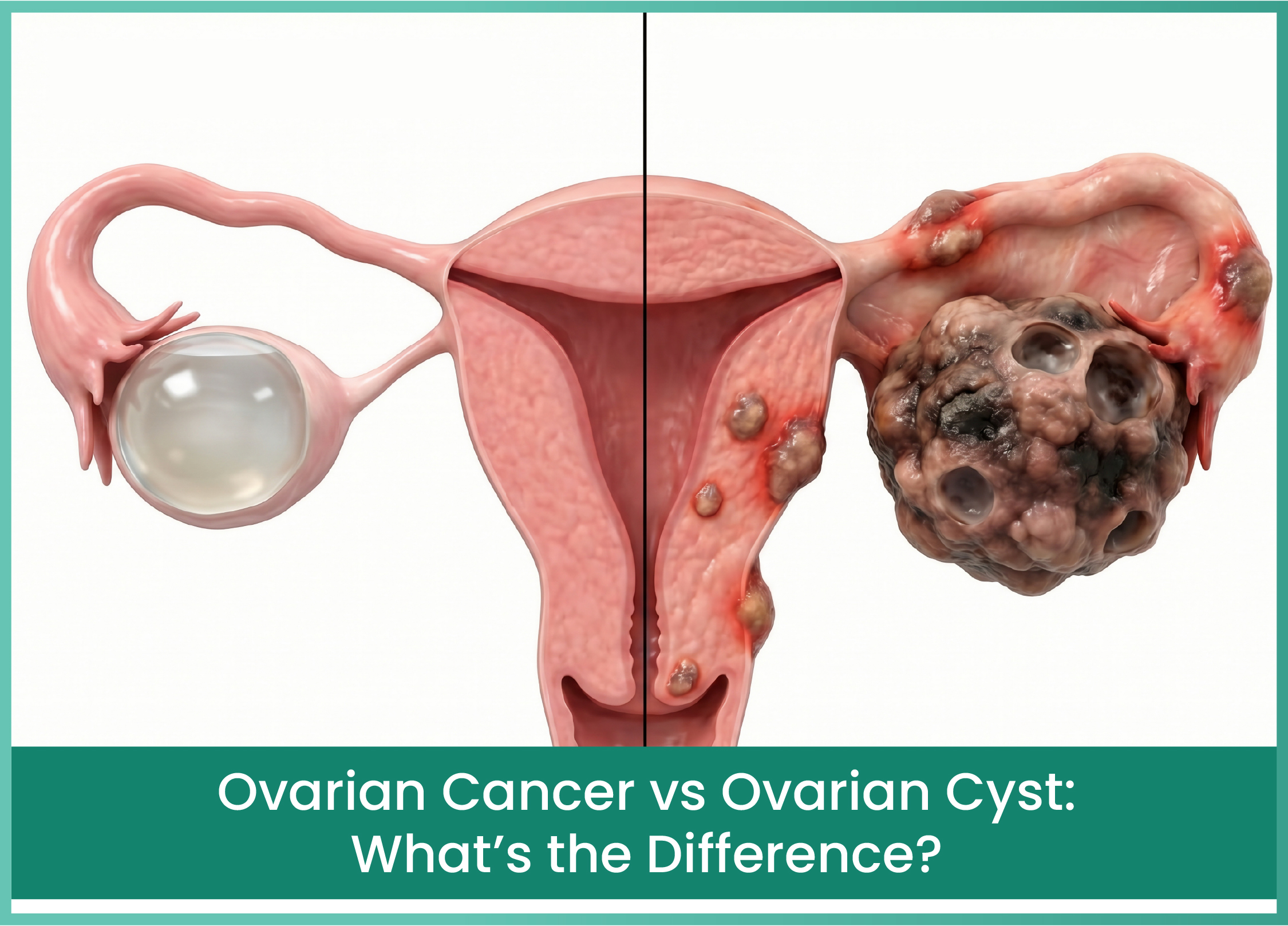
Ovarian Cancer vs Ovarian Cyst: What’s the Difference?
Finding out that you have an ovarian cyst can naturally cause concern, especially when you start searching online and come across information about ovarian cancer. Many women wonder whether an ovarian cyst can become cancerous, whether the symptoms of ovarian cysts and ovarian cancer are similar, and how doctors determine whether an ovarian mass is harmless or requires further investigation.
Although ovarian cysts and ovarian cancer both involve the ovaries, they are very different conditions. Most ovarian cysts are benign and mat disappear without treatment, while ovarian cancer develops when abnormal cells grow uncontrollably and may spread to other parts of the body. However, because some symptoms can overlap, it is important to understand the differences and recognize when an ovarian cyst or ovarian mass needs medical evaluation.
For women searching for an ovarian cancer specialist in Tardeo, an ovarian cancer doctor in South Mumbai, or an ovarian specialist lady doctor in Mumbai, understanding these differences can help you make informed decisions about when to seek specialist advice.
What Is an Ovarian Cyst?
An ovarian cyst is a fluid-filled sac that develops in or on an ovary. Ovaries naturally undergo changes during the menstrual cycle, and many ovarian cysts develop as part of normal ovulation. These are commonly known as functional ovarian cysts and are particularly common during the reproductive years.
In many cases, functional ovarian cysts are temporary and disappear on their own within a few weeks or months. A woman may not experience any symptoms and may only discover the cyst during an ultrasound performed for another reason.
However, not every ovarian cyst is a simple functional cyst. Other types can develop because of conditions such as endometriosis, while some ovarian masses may contain solid or mixed components. This is why the appearance of a cyst on imaging, its size, persistence and the woman's age and symptoms are important when deciding whether further evaluation is needed.
What Is Ovarian Cancer?
Ovarian cancer occurs when abnormal cells in or around the ovary begin growing uncontrollably. These cancer cells can invade surrounding tissues and may eventually spread to other areas of the abdomen or distant parts of the body.
Ovarian cancer is not a single disease. There are different types and subtypes, and their behaviour and treatment can vary. Epithelial ovarian cancer is one of the major types of ovarian cancer, while cancers arising from the fallopian tubes and primary peritoneum can have similar characteristics and may be managed in a similar way.
One of the challenges with ovarian cancer is that its early symptoms can be vague. Bloating, abdominal discomfort, digestive changes or urinary symptoms can easily be mistaken for common gastrointestinal, hormonal or gynaecological problems. This can sometimes result in ovarian cancer being diagnosed only after symptoms have persisted or progressed.
Ovarian Cyst vs Ovarian Cancer: What Is the Difference?
The fundamental difference between an ovarian cyst and ovarian cancer is that most ovarian cysts are benign structures, whereas ovarian cancer involves malignant cells capable of uncontrolled growth and potentially spreading to other parts of the body.
A simple ovarian cyst often appears as a fluid-filled structure with a relatively thin wall on ultrasound. Many such cysts are associated with the menstrual cycle and resolve naturally. An ovarian cancer may appear as a more complex mass and can sometimes contain solid areas, irregular walls or other features that require further assessment.
However, the appearance of an ovarian mass does not automatically establish a cancer diagnosis. A complex cyst is not necessarily cancerous, just as symptoms such as bloating do not automatically indicate ovarian cancer. Doctors consider multiple factors together, including age, menopausal status, symptoms, family history, ultrasound findings and whether the mass changes over time.
What Are the Symptoms of an Ovarian Cyst?
Many ovarian cysts do not cause any symptoms. They may be discovered incidentally during a pelvic examination or ultrasound.
When symptoms occur, they can include pelvic pain, lower abdominal discomfort, a sensation of pressure or heaviness, bloating, changes in menstrual periods and pain during sexual intercourse. A larger cyst may cause pressure on nearby organs and create abdominal discomfort.
Some ovarian cysts can also cause complications. If a cyst ruptures, it may result in sudden pelvic or abdominal pain. In some cases, a cyst can cause ovarian torsion, in which the ovary twists and potentially affects its blood supply. Sudden severe pelvic pain, particularly when accompanied by nausea or vomiting, requires prompt medical assessment.
What Are the Symptoms of Ovarian Cancer?
Ovarian cancer symptoms can be difficult to recognise because they are often similar to symptoms caused by less serious conditions. Persistent abdominal bloating or swelling, pelvic or abdominal pain, feeling full sooner than usual while eating, changes in bowel habits and increased urinary frequency or urgency can occur in women with ovarian cancer.
Some women may also experience unexplained fatigue, changes in appetite or unexplained weight changes. However, having one or more of these symptoms does not mean that a woman has ovarian cancer. These symptoms are common and can have many causes.
What deserves particular attention is a symptom that is new, persistent, recurrent or progressively becoming worse. For example, occasional bloating after a large meal is usually not concerning. Persistent bloating that continues for weeks without an obvious explanation deserves medical attention.
Can an Ovarian Cyst Become Cancerous?
One of the most common concerns after an ovarian cyst is detected is whether the cyst can turn into cancer. In most cases, a benign ovarian cyst does not simply transform into ovarian cancer.
However, ovarian masses can have different characteristics, and some findings may require closer monitoring or additional investigation. Certain ovarian tumours can also have borderline or malignant features, which is why doctors sometimes recommend follow-up imaging or specialist assessment.
The risk associated with an ovarian mass depends on several factors. Age is important because a simple ovarian cyst in a younger woman may have a different significance from a new ovarian mass in a postmenopausal woman. The size and appearance of the mass, whether it contains solid components, whether it persists or grows and whether the woman has symptoms are also considered.
Therefore, being diagnosed with an ovarian cyst does not mean that you have ovarian cancer. At the same time, an ovarian mass should be assessed appropriately rather than automatically assumed to be harmless.
Why Ultrasound Is Important in Ovarian Cyst Evaluation?
Ultrasound is one of the most commonly used investigations for evaluating ovarian cysts and masses. A pelvic ultrasound can provide information about the size, shape and internal characteristics of an ovarian lesion.
A transvaginal ultrasound may provide detailed images of the ovaries and surrounding pelvic structures. Doctors can assess whether a lesion appears predominantly fluid-filled or whether it contains solid areas, septations or other features that may require further evaluation.
Sometimes a cyst appears sufficiently reassuring that the doctor recommends observation and repeat imaging. If the cyst becomes smaller or disappears, this can support a benign explanation. If it persists, grows or develops concerning characteristics, additional investigation may be recommended.
An important point is that an ultrasound does not always provide a definitive diagnosis of ovarian cancer. It is one part of the overall assessment.
Is CA-125 a Reliable Test for Ovarian Cancer?
CA-125 is a blood test that is often discussed when ovarian cancer is suspected. However, CA-125 should not be considered a standalone test for diagnosing ovarian cancer.
CA-125 can become elevated in several non-cancerous conditions, including certain gynaecological conditions and inflammatory processes. Conversely, some women with ovarian cancer may have a normal CA-125 level.
CA-125 can become elevated in several non-cancerous conditions, including certain gynaecological conditions and inflammatory processes. Conversely, some women with ovarian cancer may have a normal CA-125 level.
This is why women should avoid making conclusions based on a single blood-test result without discussing the complete clinical picture with a doctor.
What Happens If an Ovarian Cyst Looks Suspicious?
If an ovarian cyst or mass has features that are not clearly benign, the next step depends on the individual circumstances. The doctor may recommend additional imaging, blood tests, repeat ultrasound, specialist consultation or surgical evaluation.
The patient's age and menopausal status are particularly important. A simple cyst in a young woman may simply require monitoring, whereas a persistent or complex ovarian mass in a postmenopausal woman may need more detailed assessment.
A suspicious ovarian mass does not automatically mean that cancer has been diagnosed. Further investigation is needed to understand exactly what the finding represents.
How Is Ovarian Cancer Diagnosed?
When ovarian cancer is suspected, doctors generally use a combination of clinical evaluation, imaging and laboratory investigations. Ultrasound can provide important information about the ovaries, while CT or MRI may be recommended in certain situations to evaluate the abdomen, pelvis and other areas.
If cancer is suspected, examination of tumour tissue may be necessary to determine the exact type of cancer. Pathology plays an important role because different ovarian cancers can have different biological characteristics and treatment approaches.
Once ovarian cancer has been diagnosed, doctors determine its stage. Staging helps establish whether the cancer is confined to the ovary or has spread to nearby tissues, lymph nodes or distant organs.
How Are Ovarian Cysts Treated?
Treatment for an ovarian cyst depends on its type, size, appearance, symptoms and the woman's age and menopausal status.
Some ovarian cysts do not require active treatment and may simply be monitored through follow-up examinations or ultrasound scans. Functional cysts, in particular, may resolve naturally.
If a cyst is large, persistent, and painful or has concerning characteristics, further evaluation may be necessary. In selected situations, surgery may be recommended.
The important point is that an ovarian cyst does not automatically require surgery and certainly does not automatically require cancer treatment. Management should be based on the specific characteristics of the cyst.
How Is Ovarian Cancer Treated?
Treatment for ovarian cancer depends on the type and stage of cancer, the tumour's biological characteristics and the overall health of the patient.
Treatment may involve surgery to remove the tumour and affected tissues, along with systemic cancer treatment such as chemotherapy. Depending on the individual cancer and its molecular characteristics, targeted therapies and other newer treatments may also be considered.
Genetic and molecular testing can have an important role in selected patients. Certain inherited genetic changes, including BRCA1 and BRCA2 alterations, may influence treatment decisions and can also have implications for family members.
Because ovarian cancer treatment can involve several areas of expertise, patients may receive care involving surgical oncology, medical oncology, pathology, and radiology and supportive-care specialists.
Who Is at Higher Risk of Ovarian Cancer?
Ovarian cancer can affect women at different ages, but the risk generally increases with age. A woman's personal and family history can also influence her individual risk.
A family history of ovarian cancer or certain breast cancers may raise concern about inherited cancer-predisposition genes. Mutations in genes such as BRCA1 and BRCA2 are associated with increased risks of certain cancers, including ovarian and breast cancers.
Having a family member with ovarian cancer does not mean that a woman will definitely develop the disease. However, women with a significant family history may benefit from discussing their risk with a qualified specialist and, where appropriate, considering genetic counselling or testing.
Can Ovarian Cancer Be Detected Early?
Early detection of ovarian cancer can be challenging because there is no simple routine screening test that reliably detects ovarian cancer early in average-risk women who have no symptoms.
This makes awareness of persistent symptoms particularly important. Women should pay attention to changes that are unusual for them, particularly when symptoms continue or become more frequent.
Persistent bloating, abdominal or pelvic discomfort, unexplained abdominal swelling, feeling full quickly or changes in urinary and bowel habits should be discussed with a doctor if they do not settle or repeatedly return.
This does not mean that these symptoms indicate cancer. It means that persistent unexplained symptoms deserve an appropriate medical evaluation.
When Should You Consult an Ovarian Cancer Specialist?
Not every ovarian cyst requires an oncology consultation. However, specialist evaluation can be important when an ovarian mass is complex, persistent, enlarging or associated with concerning symptoms. Specialist assessment may also be appropriate when a woman is postmenopausal and has a newly detected ovarian mass or when ovarian cancer is suspected or already diagnosed.
For women seeking an ovarian cancer specialist in Tardeo, best ovarian cancer doctor in South Mumbai, or an ovarian specialist lady doctor in Mumbai, Dr. Reetu Jain is a medical oncologist has expertise in solid tumours, including ovarian cancer.
Ovarian Cyst Does Not Always Mean Cancer
One of the most important things women should remember is that an ovarian cyst does not automatically mean ovarian cancer. Most ovarian cysts are benign, and many disappear without treatment.
At the same time, women should not ignore an ovarian mass simply because most cysts are harmless. A persistent, complex or growing mass may need additional investigation.
The right approach is therefore neither unnecessary fear nor complete reassurance without evaluation. Instead, the goal should be to understand what the imaging shows, consider individual risk factors and follow the appropriate medical advice.
Ovarian Cancer vs Ovarian Cyst: The Bottom Line
Ovarian cysts and ovarian cancer are different conditions, even though some of their symptoms can overlap. Most ovarian cysts are benign and may resolve naturally, while ovarian cancer involves malignant cell growth and requires specialist treatment.
An ovarian cyst becomes more important to investigate when it is persistent, complex, growing or associated with concerning symptoms. Age, menopausal status, family history and ultrasound characteristics all contribute to determining the appropriate next step.
Women should also remember that symptoms such as bloating, pelvic pain or digestive changes are not specific to ovarian cancer. However, if these symptoms are new, persistent or progressively worsening, they should not be ignored.
If you have been diagnosed with an ovarian cyst or ovarian mass and are worried about ovarian cancer, a specialist evaluation can help you understand what the finding means and whether further investigation is necessary. For women in Tardeo and South Mumbai, Dr. Reetu Jain, a medical oncologist provides specialist expertise in ovarian and other solid tumours.
The most important step is not to assume that every cyst is cancer or that every cyst is harmless. Understanding the individual finding and getting the right medical evaluation is what matters most.